Crash Em Zombies
Sprunki Retake FINAL v4
The Superhero League
Truck Driving Construction Transport
4inROW

Mona Lisa Fashion Experiments

Tiktok Gravity Knife Rush
Toops
Blocks: Move HIT PRO
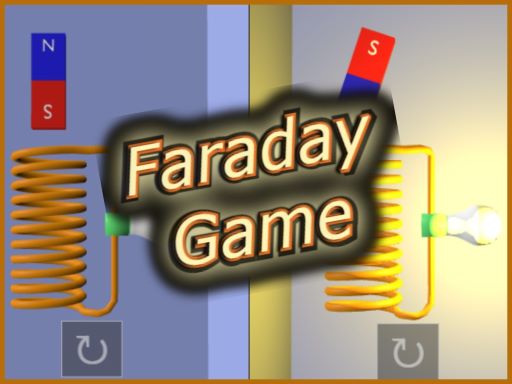
Faraday Game Casual Physics

Celebrity Lunar New Year

My First Robot
A surprising fact about these puzzles In Faraday Game Casual Physics, the “smart” answer is often the simplest one. If you’re stacking ten things… you might be doing too much. What you do in the game This is a quirky physics puzzle about equilibrium—keeping balance using weight and force. You’ll: Move or place objects, Adjust the balance, Sometimes catapult or launch items for surprising results. Your loop: Look at the setup (what’s heavy? what’s floating? what’s tipping?). Make one change (move/rotate/place). Watch how the balance reacts. Repeat until the level’s goal is met. Real player moment: you try a “genius” plan, it fails, and then a tiny adjustment solves everything. Controls Desktop Mouse to drag, place, or interact with objects. Mobile Tap and drag to move objects (if supported). How you win / progress You win by solving each physics challenge. Progress is usually level-based: Finish one puzzle, Unlock the next, Face trickier setups with stranger balance points. Scoring (if included) often rewards fewer moves or faster solutions—so thinking clearly matters. Objects / mechanics you’ll use Based on the description, expect puzzles with: Weights (heavy vs light matters), Levers or platforms (balance points), Force (pushing or launching), Catapult-like motion (send an object where it needs to go). Tips to play better (12 tips) Find the pivot point first. Ask: “What’s the level balancing on?” Test with tiny moves. Big moves create big chaos. Heaviest object rule: place heavy items closer to the center if you need stability. Need tipping? Move weight farther from the center to create stronger swing. One change at a time. If you change two things, you won’t know what helped. Use symmetry. Even weight on both sides often calms a wobble. If you’re catapulting, aim for a safe landing zone. Flat surfaces beat bouncy edges. Watch for “fake solutions.” If it works for one second then collapses, it’s not stable. Don’t fight the physics. Let objects settle before your next move. If you keep overthinking, restart and try the simplest idea. The game even hints this! Keep your eyes on the balance line, not the object. Balance is the real goal. Coach voice: Slow down—physics is picky. Levels / modes / progression This game shines as levels get more creative: More objects to manage, Trickier balance, Launching puzzles where the right force matters. If you get stuck, remember: early levels teach a rule you’ll need later. Common problems & quick fixes Dragging feels weird: Zoom to 100% and drag slower. Objects “jump” on mobile: Try playing landscape mode or switch to desktop. Lag: Close extra tabs; physics calculations can slow down. Sound missing: Check volume and mute. Stuck loading: Refresh once or try another browser. Parent note (2–3 lines) Faraday Game Casual Physics helps kids practice cause-and-effect and problem solving. A nice rule is: try a puzzle for 5 minutes, then take a short break. Quick Info box Platform: Browser (HTML5) Genre: Physics puzzle / logic Age fit: 7–13 Session length: 8–20 minutes Controls: Drag/place objects (mouse; touch if supported) FAQ (6) Q1: What does “equilibrium” mean here? A: It means keeping things balanced so they don’t tip or fall the wrong way. Q2: I keep tipping the platform. What should I do? A: Move weight closer to the center and make smaller adjustments. Q3: How do I use force correctly? A: Test gently first. Big pushes are harder to control. Q4: Are there trick solutions? A: Yes—some setups look easy but need one smart placement. Q5: What’s the fastest way to improve? A: Change one thing at a time so you learn what each object does. Q6: Can younger kids play? A: Yes, but some puzzles may need a parent’s help to explain balance.

So many more games you can play!
More games
 Home
Home
 Trending Games
 Categories
 Arcade
  .IO
.IO  3D
3D  Action
  Adventure
  Shooting
  Racing
  Girl
Girl  Puzzle